I spent my childhood convinced I'd be an illustrator, and then spent thirty years going the long way around.
Cincinnati was my hometown, where I spent a good part of my childhood drawing and one memorable stretch of it objecting, unsuccessfully, to a neighborhood forest being cleared for a Sam's Club. In my twenties I spent six months on the Appalachian Trail. A job brought me here to the Pacific Northwest in 2007, and I stayed for the mountains.
My undergraduate degree was in graphic design, but I've spent most of my career in landscape architecture — first on public projects, including the grounds of the Smithsonian's National Museum of African American History and Culture, and later on ecological work here in the Pacific Northwest: site restoration, and new landscapes designed around native plants and the systems already in place. I've come to think that's how all of it should work — that designing a place and understanding its ecology aren't separate jobs. That work is on hold for now while my family needs more of me.
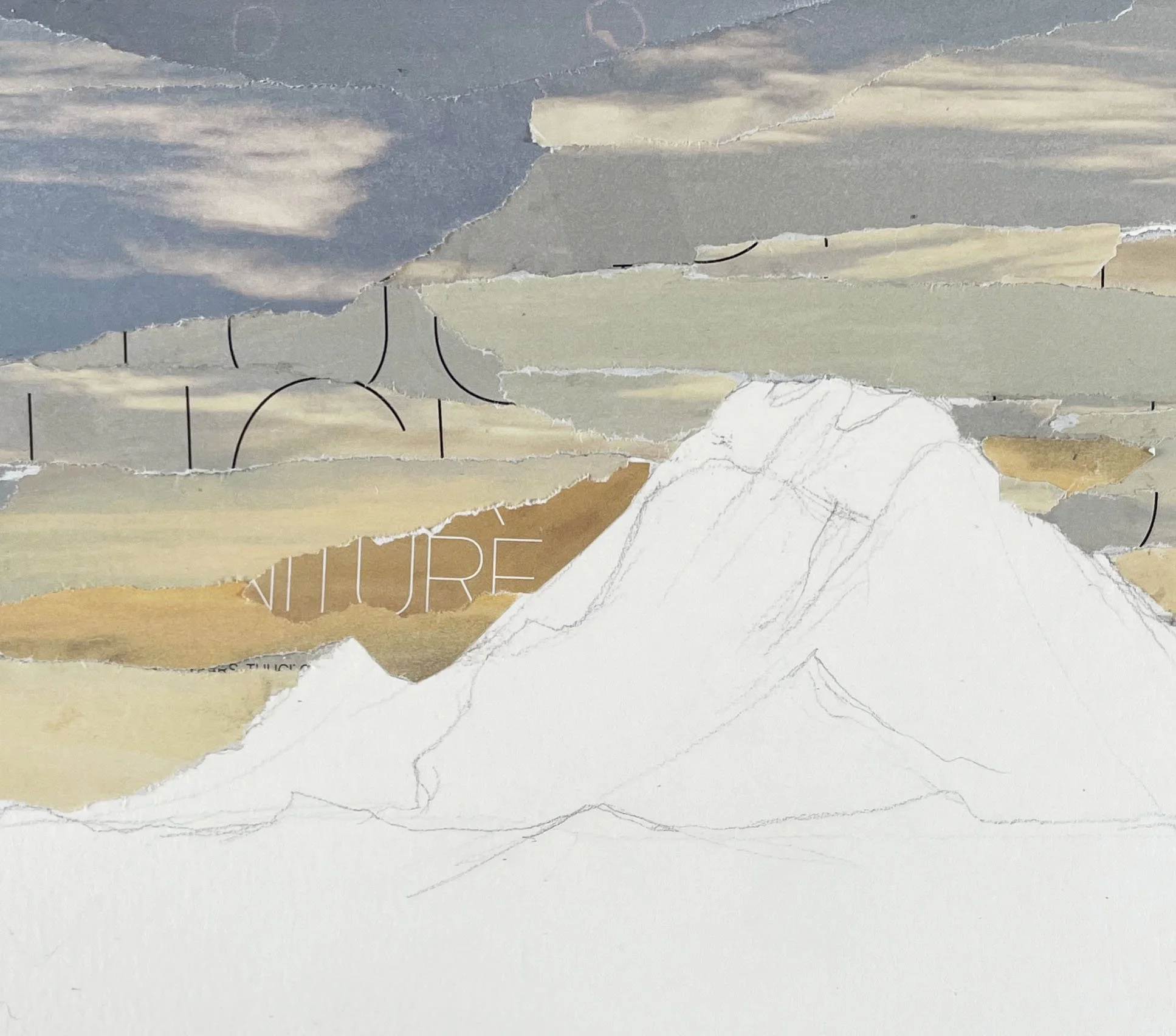
The collages started as a way to keep making things, and turned out to be the same idea at a smaller scale — making something new out of what's already here. The landscapes are the mountains I live among. The smaller studies are what's living at their feet: the fungi, the insects, the things doing the actual work of keeping a forest going.